Japanese Sword Components - Tsuba (Guard)
By Dremdsword
August 14th, 2024
471 views
A tsuba (鍔, or 鐔) is a sword guard and part of a sword mounting. Tsuba is a kind of Japanese sword mounting. It was initially equipped with a Japanese sword for practical reasons. It is mounted between the sword's blade and grip to protect the user's hands. However, Tsuba attached importance to its decorativeness. It had been developed as an essential sword outfit that combines utility and beauty since the Edo period.
Western swords also have guards, but especially since modern times, many of them are connected with handles. Therefore, they look different, compared to Japanese handguards, Tsuba. People expected that Tsuba fulfills two roles: practicality to attack enemies and to protect users. And Tsuba shouldn’t have been lost its good looks. In each area, Tsuba had been enhanced its artistry through the efforts and ingenuity of numerous Tsuba artisans.
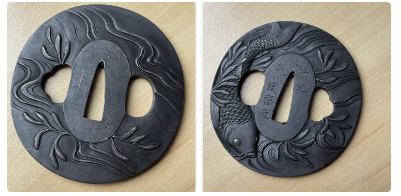
The key of producting a good tsuba is the choice of materials, ingenious and creative design style, appropriate composition and space allocation, concise construction technology, a good state of preservation etc. The tsuba usually can be made of alloy, iron, brass.
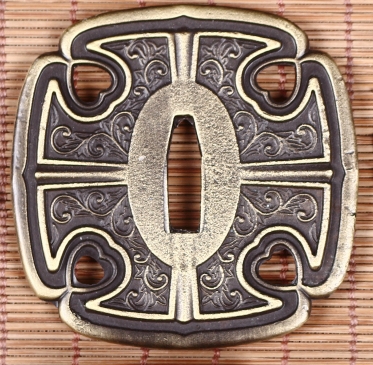
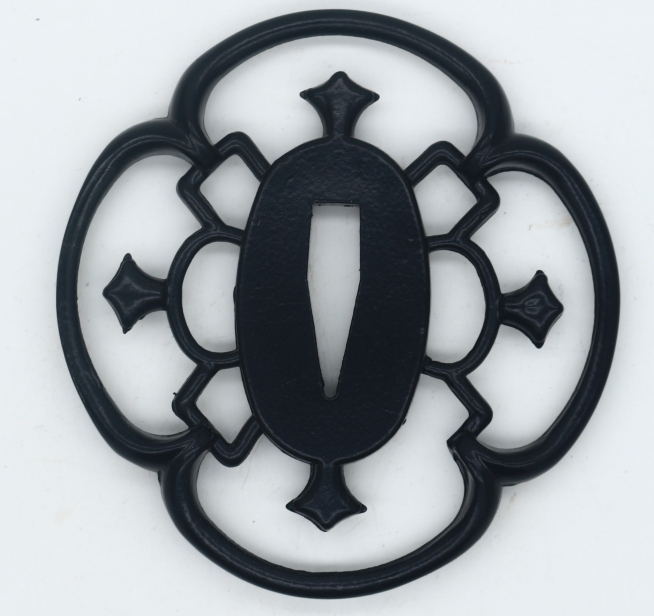
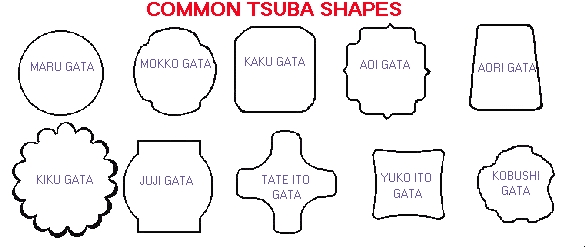
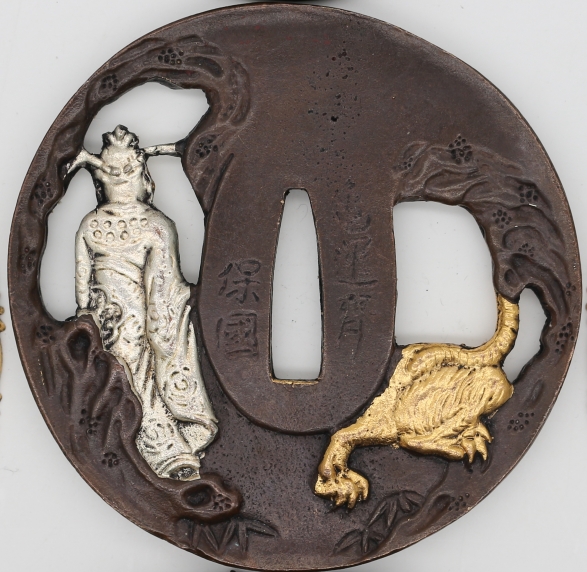 The tsuba shape is usually round (maru gata), rounded-square (kaku gata) and four lobed (mokko) with many variations within each basic design. The patina (surface coloration) gives the tsuba its beauty. Clean tsuba will remove the patina and destroy the beauty and value of the item.
Maru gata is round tsuba and the most common shape. Some round tsuba can be elliptical or slightly oval rather than perfectly round.
Kaku gata is square tsuba often with rounded corners. It can also be hexagonal or octagonal or even trapezoidal shapes.
Shitogi tsuba looks like a very old-fashioned keyhole that is used during Shinto rituals. Shitogi tsuba katana are almost always ceremonial swords.
Mokko gata has four lobes and look like the surface of a cut melon or gourd. There are great variation in the types of mokko gata all with intricate designs.
Previous
Katana Making Process: Clay Temper
Read More
Next
About Polishing the Japanese Samurai Sword
Read More


